|
The pilgrims must seek guidance
and learn about all the rituals that are essential for the
performance of Haj according to the Maslak they follow.
However, it must be known to all, irrespective of their
background, that the Ka'ba is a sacred house, so are the
people who surround it. Whatever the Haji does here, he must
not hurt anyone, not even accidentally. That is what we mean
when we refer to Haram (the sanctuary) and the
hudood-e-Haram (precincts of Haram). Harming anyone in
Haram means the Haj is simply not complete. So do not rush, do
not push. Take it easy and should someone act wildly, simply
get out of the way. Remember that amidst all this apparently
ostentatious public participation in numerous rituals, Haj is
immensely and intensely personal. The Haji is always focused
on personally performing the ritual perfectly.
Within the
territory of Haram, it is the Haram law and Ihraam dress that
apply. The conditions of Ihraam and how to wear it ought to be
understood.
Even
the pilgrim who gets out of the state of Ihraam should
remember that a number of conditions still apply to the Haj
pilgrim and these conditions entail truthfulness, compassion
to fellow beings, good conduct, good thoughts, exemplary
behaviour, desisting from anger and angry outburst, desisting
from physical violence and so on.
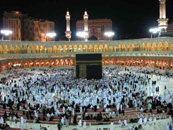
Ka'ba is not sacred due to some of the sanctified spots but,
rather, because of its symbolic value as a marker of the
Qibla, the direction of prayer. Ka'ba contains no
relics and is not itself an object of prayer. It rather
provides spiritual focus and symbolizes God's Being at the
centre of creation.
|